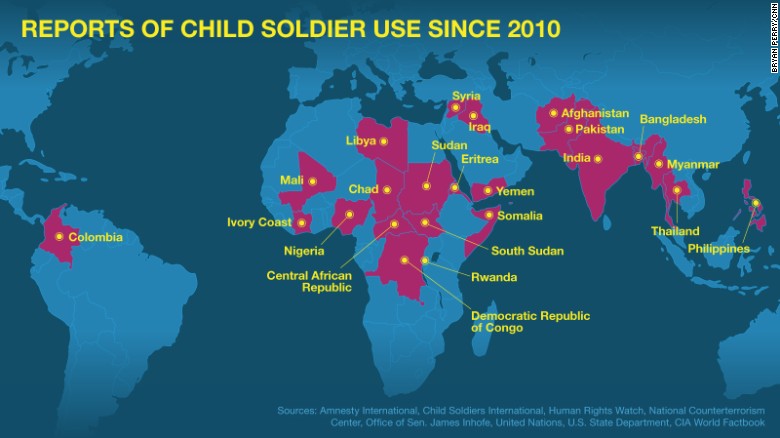
Children have been heavily relied upon in history. In hunter-gatherer societies, children were used as laborers once they reached an age where they could walk. During the 1700’s, children were primarily seen as an extra set of hands to work the fields, while in the industrial revolution, children worked in factories and mills in harsh conditions that were unfit for modern society. Now, children are seen as an extra pair of hands to hold a gun. Although the use of children as soldiers may be seen as an effective way to fight, spy, and remove a child from a potentially negative life at home, the use of children as soldiers drastically harms their physical and psychological state. Many organizations and countries have acted to reduce the amount of children used as soldiers; however, education and awareness are the best solutions to reduce the amount of child soldiers.
History of Children Soldiers
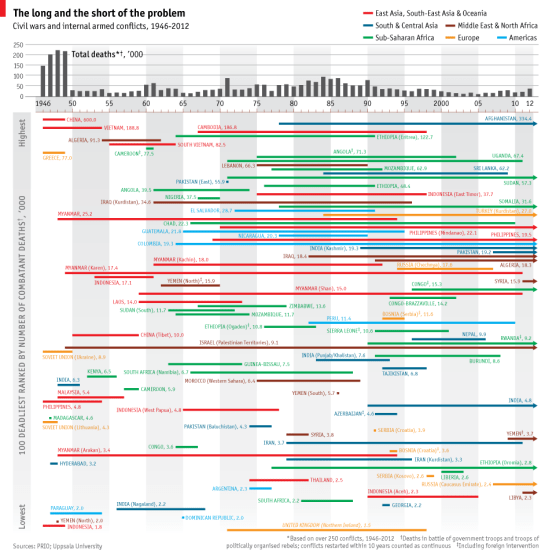
During the 1990’s several wars and armed conflicts occurred in which children were used to fight against factions or the government. The infographic includes the many casualties from the the Rwandan civil war and the following genocide where the Hutu majority of the Democratic Republic of Congo killed the Tutsi minority. The UN estimated that approximately 15-30% of people recruited to engage in the genocide against the Tutsis were minors. The use of child soldiers is not a new practice, during the Ottoman Empire young Christian and Jewish boys (Janissary Corp) were the prized fighting force of the Turkish country. Later, when the Soviet Union invaded Afghanistan in 1997, approximately 300,000 children were killed due to being soldiers. The use of child soldiers is not limited to one country or region of the world. During World War II, Great Britain and Germany used children and young teenagers to fight the opposing side. Great Britain’s Home Guard was formed of young teenagers. The teenagers would have been considered child soldiers as they were below the age of 18 and required to serve in army. The use of children was more evident in Germany as the Hitler Youth were indoctrinated from childhood. They were later trained to become soldiers. The differences in gender often determined what job was required, which determined the effect of war on the children. Young girls were often used as porters or sex slaves, which resulted in psychological trauma/post traumatic stress disorder and a higher risk for drug abuse. Young boys who were typically used as soldiers and spies experienced trauma that were similar to girls. Boys suffered from post traumatic stress disorder, had a higher change for drug abuse later in life, and had a reduced change to form functional relationships in adulthood. While the psychological traumas often drastically impair the life of those involved, the physical effects shown highlight the gruesome reality of children involved in warfare.
Effects of Warfare on Children
The loss of limbs, deafness, blindness, and a reduced quality of life after being harmed, are all results of children being exposed to war young. Organizations and countries have attempted to reduce the negative effects of war on children. But, attempts to prevent children soldiers are still fairly recent as until 1949 with the addition of article 77.2 to the geneva conventions, children soldiers were still acceptable and thus, common. Several organizations/countries are collaborating to reduce the effects of child soldiers.
Current Solutions
Countries have attempted to reduce the amount of child soldiers by signing treaties and collaborating to reach a solution. Many organizations are trying to bring awareness to child soldiers through educating the public such as ‘Children and Armed Conflict’ and ‘Child Soldiers International Documents’. UNICEF has been a major advocate for the reduction/eradication of children soldiers. UNICEF has tried to reduce the amount of landmines by increasing awareness and creating an International Day for Mine Awareness and Assistance in Mine Action. Unfortunately, children make better soldiers as they are obedient and easily manipulated.
The UN is also a major actor in the attempted reduction of child soldiers, 55 countries are preventing minors from becoming soldiers by criminalizing the act of using minors as soldiers. Countries such as South Sudan and Yemen, which still have problems with the use of child soldiers, are working with the UN to prohibit minors from being involved in war. Armed conflicts and tension among countries have increased in the past few decades as shown through the previously mentioned Rwandan civil war, recruitment of children by ISIS, and recruitment by Boko Haram.
Potential solutions
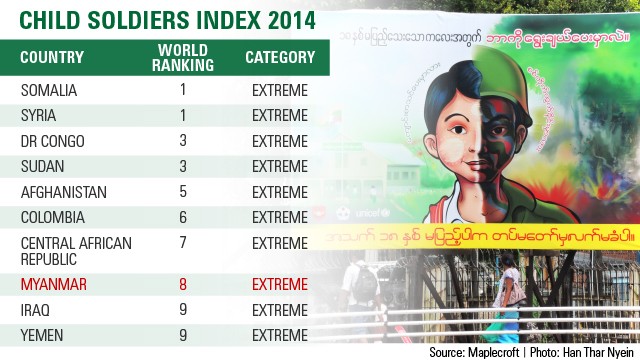
The only way to permanently eradicate the use of child soldiers would be to completely eliminate conflict worldwide. Given this unrealistic goal, better actions would be to increase education available to regions that lack access. Poorer regions that lack access to education are among the first areas which children volunteer to be soldiers. The first places money for education should be sent is South Sudan, Nigeria, Somalia, and the Democratic Republic of Congo as these are some of the areas which children soldier rates are the highest. If education rates are increased, children and parents would learn that being a soldier is not the only option available to improve their lives. Education funded by organizations monitored by UNICEF and the UN would help ameliorate the problems caused by child soldiers.
References:
 Princeton Henry